


From July 14 to 29, the summer camp of "Petrochemical Technology Frontier" organized by YGL was held at St. Petersburg Institute of Technology (SPBTI). Over ten faculty members and students from Shandong Chemical Engineering and Vocational College (SCEVC) embarked on a two-week cross-border academic journey to Russia, combining cultural immersion with professional practice through the activities arranged by SPBTI.
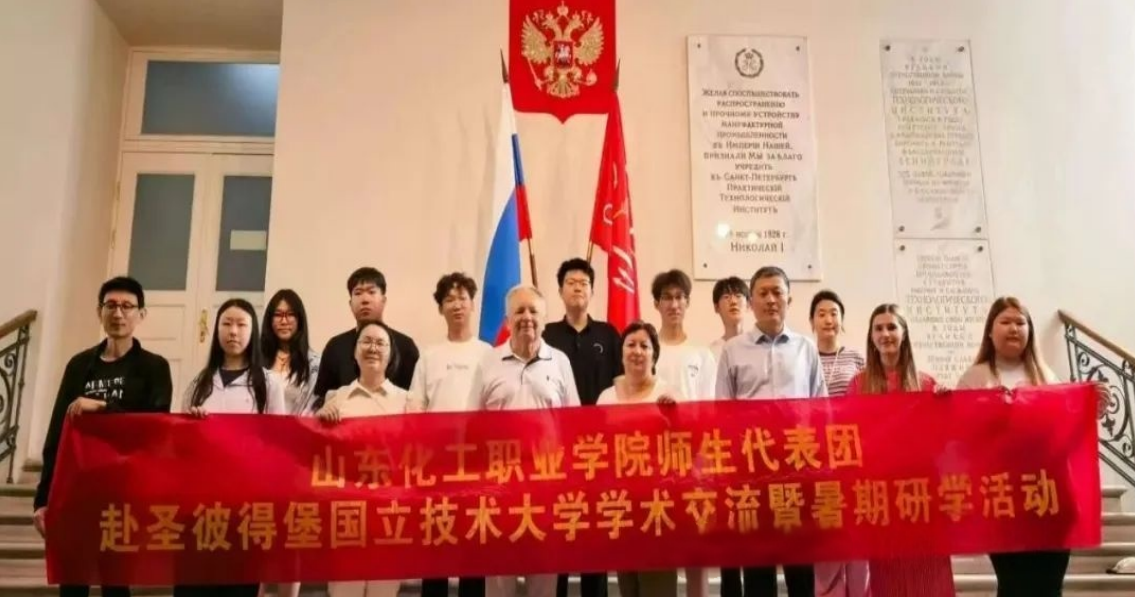
On the morning of July 16, SCEVC faculty and students arrived at SPBTI for in-depth discussions with Russian counterparts on institutional history, academic achievements, and talent development strategies. Founded on November 28, 1828 and represented by Dmitry Ivanovich Mendeleev—the inventor of the periodic table of elements—SPBTI currently boasts 28 academicians, 22 National Outstanding Scientists and Technologists, and 560 associate professors and Ph.D candidates. After nearly two centuries of development, it has emerged as a leading institution specializing in chemical engineering, biotechnology, nanotechnology, cybernetics, and related technological research fields.
Professor Valentin Sobolev from the Office of International Relations led SCEVC faculty and students to visit the university's academic auditorium, library, petrochemical laboratory, etc., so that students could deeply understand the university's education system, especially its rigorous curriculum construction and project teaching practice system, and experience the campus atmosphere of an European university.
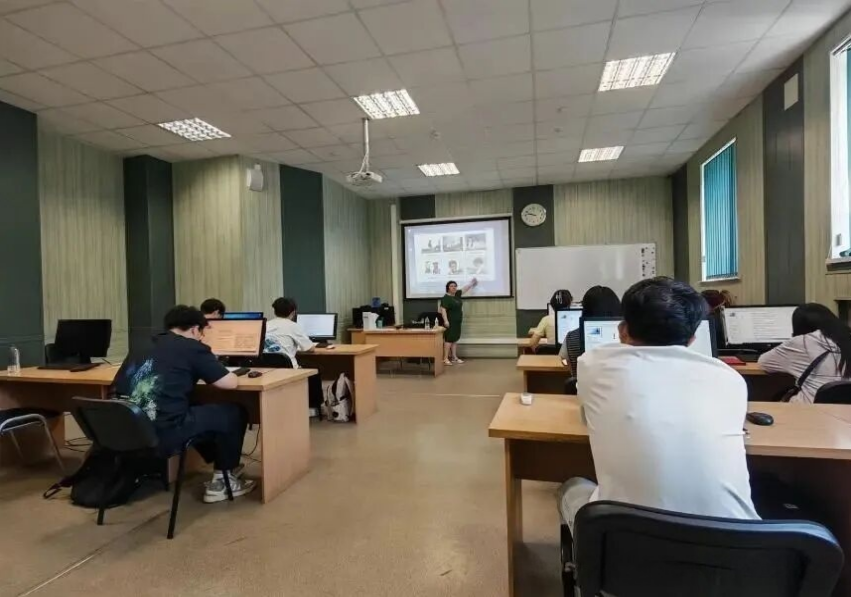
1.Language foundation: English and Russian opening the door to technical communication.
The bilingual English-Russian program facilitates communication channels for academic collaboration between the two institutions. SPBTI has specially assigned experienced teachers to provide immersive Russian pronunciation training and precise one-on-one articulation correction and help students to master basic daily communication skills. The curriculum features a specially designed "Russian for Chemical Engineering Program" module, covering practical content such as equipment terminology and laboratory instructions.
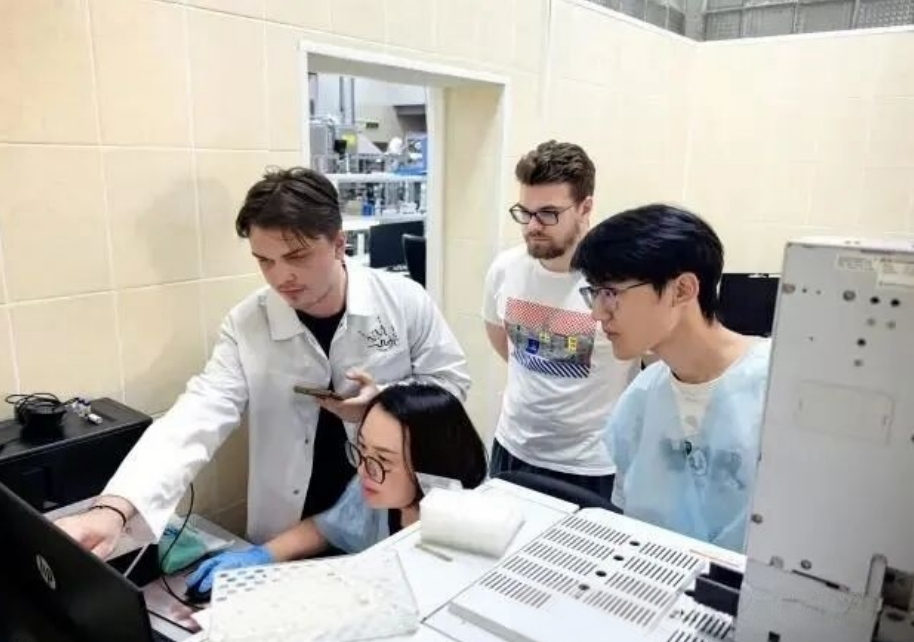
2.Process decoding: Digging into the "Heart of Oil" of Russia.
The core component of the summer camp is petroleum processing technology. Four professors from host institution delivered lectures in sequence, covering Russia's current oil industry landscape, representative refining processes, and simulations of petroleum catalytic cracking workflows. Through practical application of Aspen process simulation software, students gained foundational knowledge in establishing industrial equipment configurations and mastered precise control operations for reflux and heat exchangers.
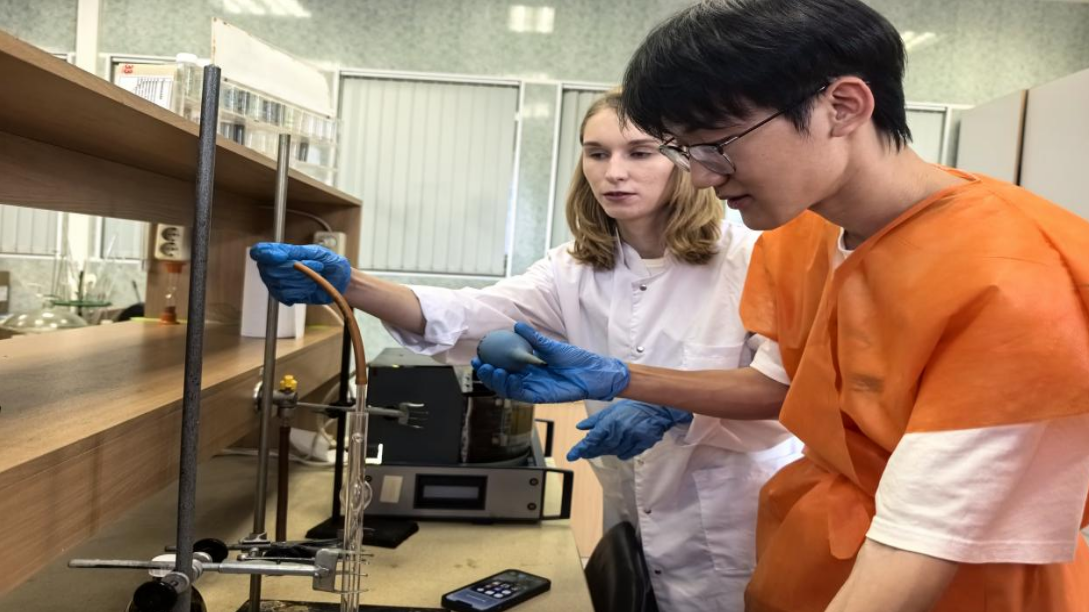
3.Scientific exploration: sharpening laboratory operation skills.
The professional laboratory sessions of this educational program included experiments such as distillation range determination, relative density measurement, viscosity analysis, and gas chromatography. The faculty and students were divided into four teams of 11 members to conduct cross-experiments and perform comparative analyses, allowing students to master professional knowledge in advance while enhancing their experimental skills. Throughout the continuous experiments, the rigorous work ethic and intense focus demonstrated by Russian scholars profoundly inspired the students.
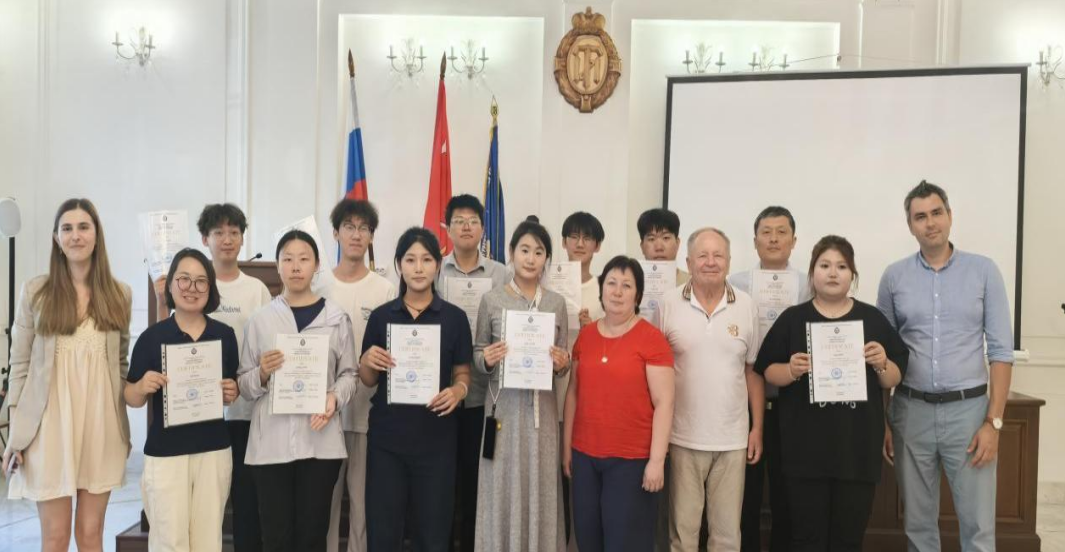
Upon concluding the event, SPBTI presented training certificates to faculty and students. This collaborative initiative has strengthened the partnership and friendship between SCEVC and SPBTI. The two institutions will continue to explore joint initiatives in multiple areas including specialized courses, research projects, and Sino-foreign joint programs.
 HOME
HOME